Monitoring
WIQ gives you unified visibility into how humans and AI agents execute your processes. Enforce quality across both and prove the impact of automation—backed by real data, not assumptions and proxy metrics.
Continues Improvement
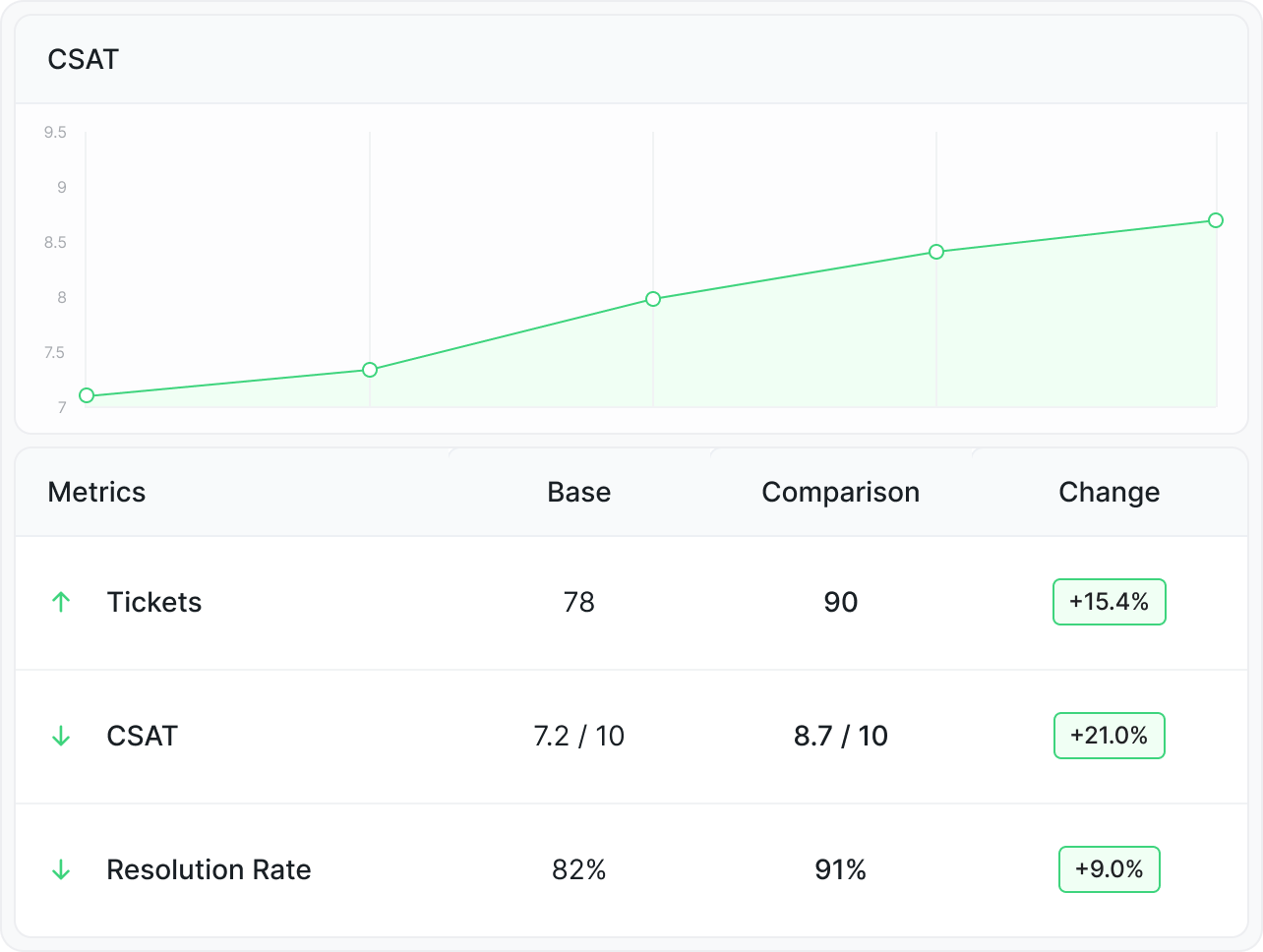
WIQ measures how processes evolve after training, tooling changes, or automation rollouts. Track improvements in handle time, compliance, and efficiency to validate the value of your investments and guide the next round of optimization.
AI Agent & RPA Monitoring
WIQ tracks how AI agents and RPA bots perform the same steps humans do. Compare business outcomes, handle times, and path divergence to understand where automation excels—and where it needs refinement.

SLA Tracking
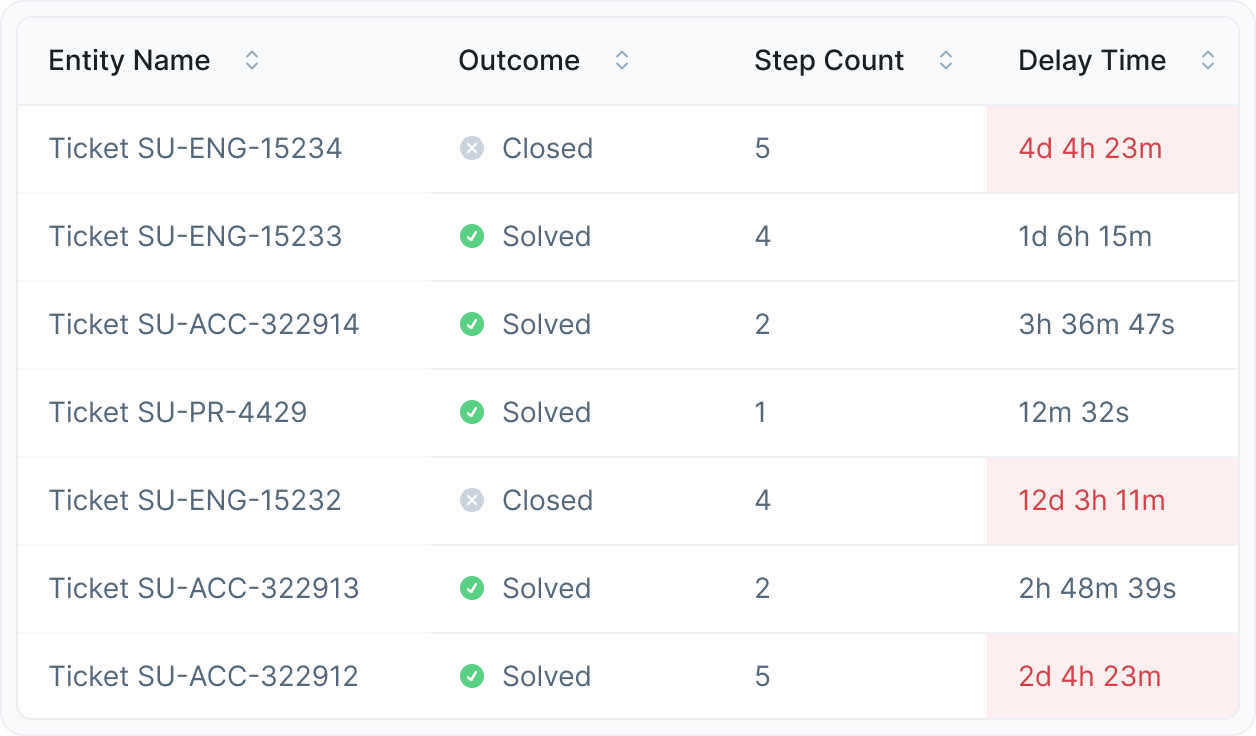
WIQ monitors cycle time and step-level delays in real time. When a process stalls or approaches an SLA breach, WIQ alerts you immediately—helping you intervene before customers or downstream teams feel the impact.
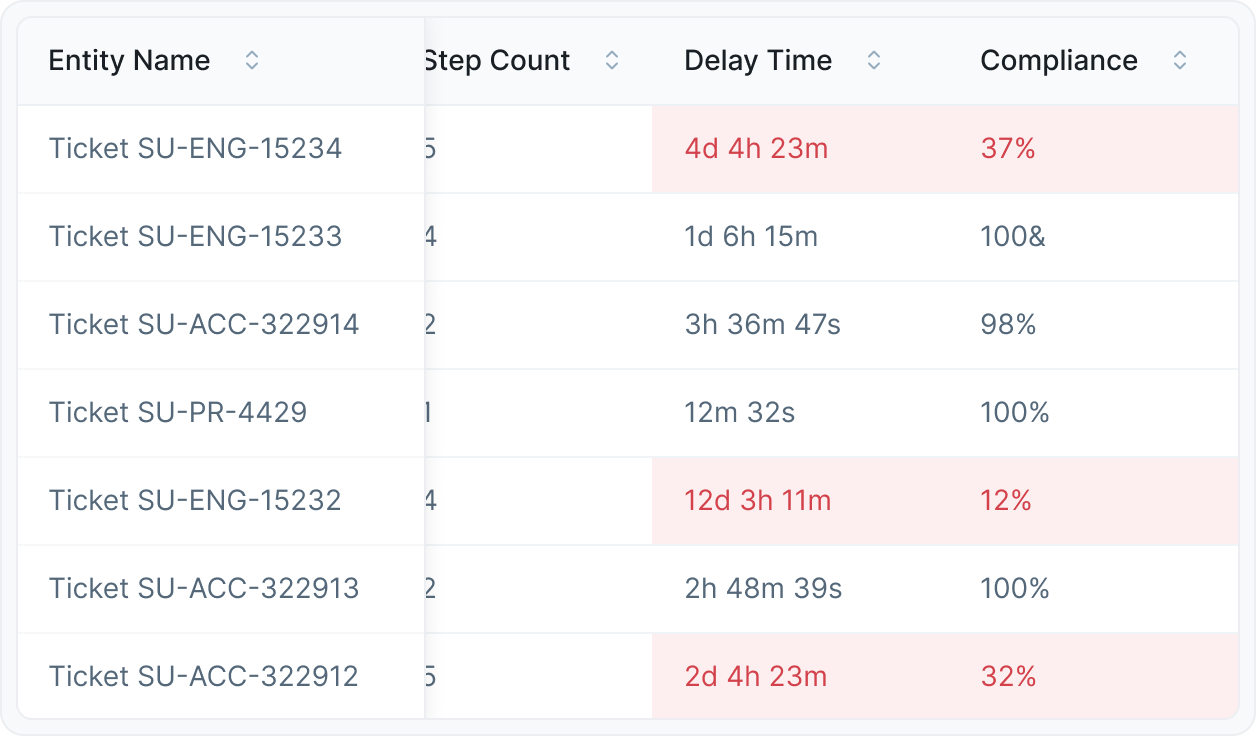
SOP Compliance
WIQ compares every execution—human or AI—to your defined SOPs. It flags skipped steps, extra actions, or deviation paths so you can maintain a high quality bar across the entire operation.