

A first AI agent pilot should answer whether an agent can perform a defined job safely and usefully under your operating conditions. Name the process owner, specify the eligible cases and decide what evidence will support an expand, adjust or stop decision before building. The sequence below is proposed operational guidance, not a guarantee of a successful deployment.
What should an AI agent pilot checklist include?
Before an AI agent pilot starts, record one workflow, a process owner, eligible cases, permitted actions, a human baseline and acceptance criteria. The pilot should produce case-level evidence for an expand, adjust or stop decision. Use the checklist below to confirm each requirement has an owner and a record.
- Scope: trigger, completed outcome, systems, eligible cases and exclusions.
- Ownership: pilot lead, process owner, integration owner and human escalation owner.
- Access: approved data, tested permissions, allowed writes and required approvals.
- Measurement: baseline case mix, handling time, errors and rework.
- Evaluation: normal cases, missing information, policy exceptions, failures and repeated requests.
- Decision: run limits, stop rules, acceptance thresholds and the review date.
1. Select a workflow with an accountable owner
Compare candidates using measured work, process evidence, system access, exception handling and measurement readiness. The process owner defines the correct result; the pilot lead coordinates delivery. Hold candidates with unresolved permissions or no accountable exception owner, even when their estimated value is high.
- Output: a selected workflow with a trigger, end state, systems, owner, exclusions and evidence gaps.
- Illustrative workflow used throughout this guide: prepare a return authorization for eligible customer requests. A support specialist approves the proposal; the agent cannot issue a refund or alter a dispatched shipment.
2. Measure the human process before changing it
The process owner and operators collect representative cases over a relevant operating cycle. Record active handling time, waiting, handoffs, exceptions and rework. Keep difficult and incomplete cases visible. Use comparable eligible cases when evaluating the pilot so a simpler case mix cannot masquerade as improvement.
- Output: dated baseline records, sample limitations and agreed definitions of completion and error.
- For the return example, separate an eligible request from a request outside policy. Record the time spent finding the order, checking eligibility, preparing the proposal and correcting mistakes. Keep approval wait time separate from active handling.
3. Specify permitted actions and human decisions
The process owner, integration owner and relevant security or data reviewers should review the workflow before enabling access. List the inputs, tools, allowed actions, approvals, stop conditions and recovery owner. Verify required access in a controlled environment. A written rule does not prove an integration enforces it.
- Output: a reviewed specification and a test set containing normal cases, missing information, policy exceptions, unavailable systems and repeated requests.
- For the return example, a missing order identifier prompts a request for information. An out-of-policy return goes to the specialist. A repeated request must not create a second authorization.
- Record what happens when the receiving person is unavailable, and whether the agent stops or may resume after approval.
4. Run a limited test and inspect the actual outcomes
Agree the case scope, run window, volume limit and acceptance criteria before the run. The pilot lead records every attempted case, the agent’s actions and the final outcome. The process owner reviews failures and a defined sample of successful cases. Test logic in simulation where useful, then verify actual permissions, writes and recovery in a controlled integration test.
- Output: a case-level results log with the same definitions as the baseline.
- Track correct completions out of attempted eligible cases, review time, exception work, duplicate actions and unauthorized changes. Record failed and abandoned cases.
- For the return example, inspect the receiving queue and actual order state, not just the agent’s message.
- Set a stop rule for an unauthorized action or lost case ownership. Agree other thresholds with the process owner rather than adopting a universal accuracy target.
5. Decide whether to expand, adjust or stop
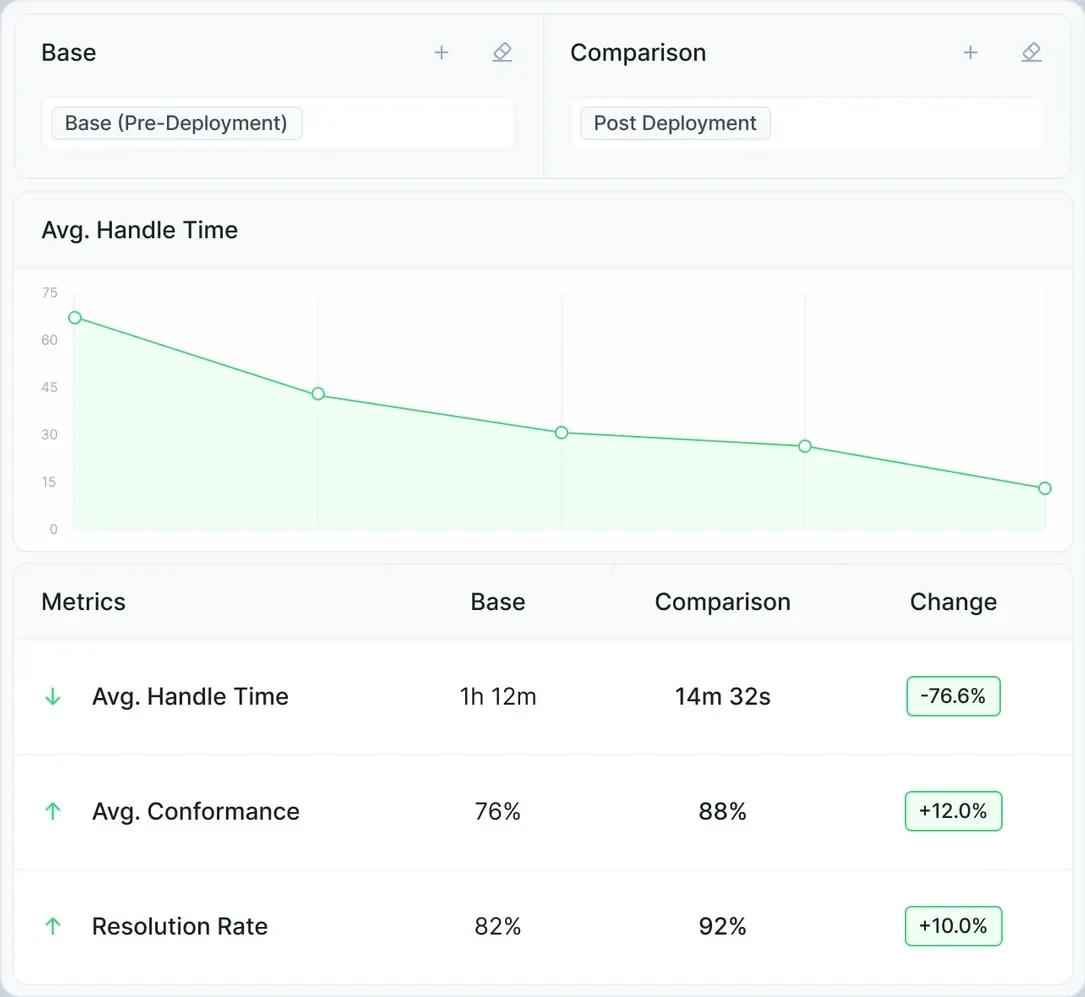
The process owner accepts the operational result and the budget owner reviews the economics. Compare eligible cases with the baseline, including review effort, additional exception work and maintenance. Preserve both the original estimate and observed results. Document any case-mix change or missing measurements that limits the comparison.
- Output: an expand, adjust or stop decision, its evidence, unresolved work, responsible owner and next review date.
- Expand only the case types that meet the agreed criteria and have approved access.
- Adjust a narrow failure mode when its owner can define and test a correction. Stop when the workflow cannot meet the agreed safety or value requirements.
- For the return example, an eligibility exception should update the reviewed specification and test set before the next run. Do not quietly broaden the agent’s authority.